The internet provides access to a wide range of websites, online tools, educational resources, and digital services. However, the way people access web content can vary depending on their network, browser, location, and the technical requirements of individual websites. Web proxy services are one technology used to process web requests through an intermediary connection.
BlockAway.org is associated with browser-based web proxy access. Understanding how a web proxy works, what it can do, and where its limitations lie can help users make informed decisions about their browsing experience.
This guide explains the concept behind BlockAway, the basic principles of web proxy technology, common uses, privacy considerations, security limitations, and responsible browsing practices.
What Is BlockAway.org?
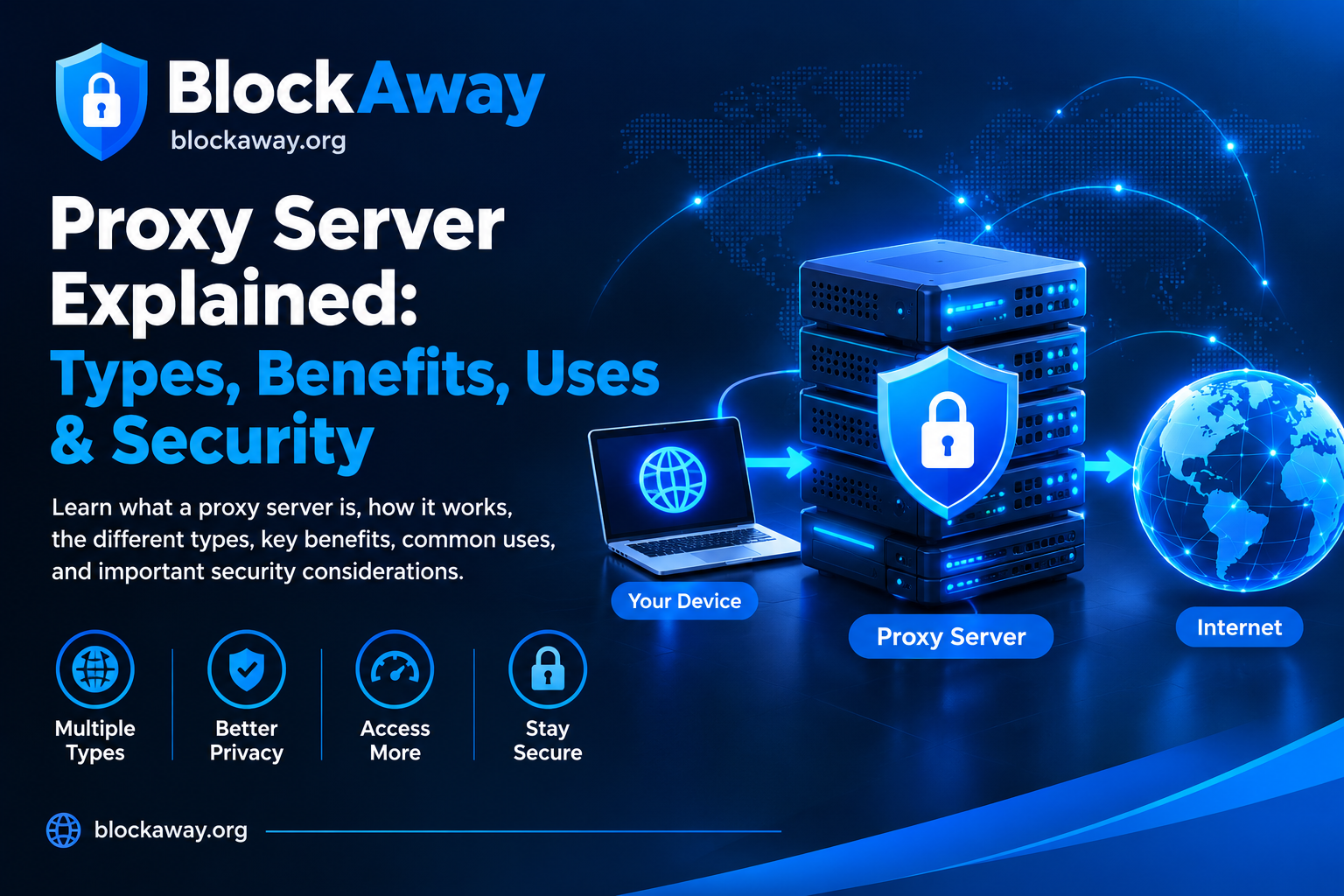
BlockAway.org is a website associated with web proxy technology. A Web Proxy acts as an intermediary between a user’s browser and a destination website. Rather than following a direct connection from the browser to the destination, a request can be processed through proxy infrastructure.
The general process can be represented as:
User’s Browser → Proxy Service → Destination Website
The proxy receives a request, attempts to communicate with the requested website, and processes the response according to its implementation.
The exact features and compatibility of any proxy service depend on its underlying technology and configuration. Not every website will necessarily work correctly through a proxy.
Understanding How a Web Proxy Works
A web proxy can change the route through which a web request travels. When a user submits a website address, the proxy may attempt to retrieve the requested content and return it to the browser.
A simplified process includes the following steps:
- Enter a website address: The user provides the URL they want to visit.
- Submit the request: The browser sends the request to the proxy service.
- Process the destination: The proxy attempts to connect to the requested website.
- Receive the response: The destination website returns a response to the proxy.
- Display compatible content: The proxy attempts to deliver the resulting content to the user’s browser.
Modern websites can involve JavaScript, cookies, login sessions, application programming interfaces, redirects, and other technologies. These features may affect whether a website works as expected through a proxy.
Why Do People Use Web Proxies?
Web proxies have several potential applications. Their usefulness depends on the type of proxy and the user’s needs.
Browser-Based Web Access
A browser-based proxy can provide an intermediary way to request compatible web content without requiring a separate proxy application for basic use.
Learning About Internet Technology
Proxy services can help users understand how web requests move between clients and servers. They are also useful for learning about network routing, HTTP requests, and client-server communication.
Website Testing
Developers and testers may use proxy infrastructure to examine website behavior through an intermediary connection. The suitability of a particular service depends on its technical capabilities.
Understanding Network Restrictions
Some networks restrict access to certain websites or categories of content. Proxy technology is sometimes discussed in this context, but a proxy does not guarantee that a restricted website will become accessible. Users should follow applicable laws and network policies.
Does BlockAway Make Browsing Completely Anonymous?
A proxy should not be considered a guarantee of complete anonymity.
Depending on its configuration, a proxy may cause a destination website to see the proxy server’s public IP address instead of the user’s original public IP address. However, online identification involves more than IP addresses.
Websites may also use:
- Cookies and session identifiers
- Account login information
- Browser characteristics
- Device and connection information
- Analytics and third-party services
- Other technical signals
For example, signing in to an account can allow a website to associate activity with that account even when the request passes through a proxy.
Users should therefore avoid assuming that a proxy makes every online activity untraceable or removes all forms of tracking.
Is a Web Proxy the Same as a VPN?
No. A web proxy and a virtual private network (VPN) are different technologies.
A web proxy generally processes particular web requests through an intermediary service. A VPN can establish a broader network connection between a device and a VPN server, depending on its configuration.
The two technologies can therefore differ in their scope, setup, traffic handling, and security properties.
Neither technology automatically guarantees complete anonymity. Users should select a solution according to their actual privacy, security, and networking requirements.
Why Might Some Websites Not Work?
Not all websites are compatible with browser-based proxy services.
A website may depend on features that a particular proxy cannot fully support, including:
- JavaScript applications
- Cookies and session management
- Authentication systems
- WebSockets and real-time connections
- Redirects and embedded content
- CAPTCHA or anti-bot systems
- Browser-specific functions
- Third-party scripts and APIs
These dependencies may cause a page to load partially, display incorrectly, or fail to load altogether.
A website’s compatibility can also change when its owner updates its security settings or application code. For this reason, no general-purpose proxy should be assumed to work with every website.
Privacy Considerations When Using a Proxy
Privacy depends on how a service operates and what information it processes.
When evaluating any proxy service, users should consider whether its privacy policy explains the handling of connection information, request data, cookies, technical logs, and other operational information.
Users should not assume that a service keeps no logs unless that claim is clearly documented and trustworthy.
It is also important to understand that the proxy operator may occupy a position between the user’s browser and the destination website. Users should consider this when deciding whether to submit sensitive information.
Security and HTTPS
A proxy does not automatically make every connection secure.
HTTPS helps protect information transmitted between compatible endpoints by encrypting the connection. However, the security properties of a proxied connection depend on the protocols and implementation involved.
Users should pay attention to browser security warnings and avoid entering passwords, payment information, or confidential data on unfamiliar or suspicious websites.
A proxy should not replace basic security practices such as keeping software updated, using strong passwords, enabling multi-factor authentication where appropriate, and checking website addresses before submitting information.
Responsible Use of BlockAway.org
Proxy technology has legitimate uses in education, testing, research, and web access. It should nevertheless be used responsibly.
Users should:
- Follow applicable laws and regulations.
- Respect the terms and policies of destination websites.
- Avoid unauthorized access to accounts or systems.
- Avoid using proxy services for fraud, harassment, or harmful activities.
- Protect passwords and other sensitive information.
- Understand that a proxy does not remove personal responsibility for online actions.
A proxy changes how certain requests are routed; it does not change the rules that apply to a user’s activity.
Frequently Asked Questions
What is BlockAway.org?
BlockAway.org is associated with browser-based web proxy access. A web proxy acts as an intermediary when requesting compatible web content.
Do I need to install software to use a browser-based proxy?
Basic browser-based proxy use generally does not require a separate proxy application. Actual requirements depend on the service and the features being used.
Does BlockAway guarantee anonymity?
No. A proxy does not guarantee complete anonymity. Websites may still recognize users through accounts, cookies, browser characteristics, and other technical information.
Can a proxy access every website?
No. Some websites may block proxy traffic or depend on technologies that are incompatible with a particular proxy implementation.
Is a web proxy a replacement for a VPN?
Not necessarily. A proxy and a VPN serve different networking purposes. The appropriate option depends on the user’s requirements.
Does using a proxy automatically encrypt all traffic?
No. Encryption depends on the protocols and connections involved. A proxy should not automatically be treated as an encrypted tunnel for all device traffic.
Why should I read a proxy service’s privacy policy?
A privacy policy can explain how a service handles information, what data may be collected, how long it may be retained, and how users can contact the operator with questions.
Final Thoughts
BlockAway.org provides a context for understanding browser-based proxy access and the technology behind intermediary web requests. Web proxies can be useful for learning, testing, and requesting compatible web content, but their capabilities depend on the underlying implementation and the destination website.
A proxy is not the same as a VPN, does not guarantee complete anonymity, and does not automatically make every connection secure. Understanding these limitations helps users make better decisions about privacy, security, compatibility, and responsible browsing.
When using BlockAway.org or any other proxy service, users should protect sensitive information, review relevant privacy policies, follow applicable rules, and avoid relying on unsupported promises of total privacy or unrestricted access.