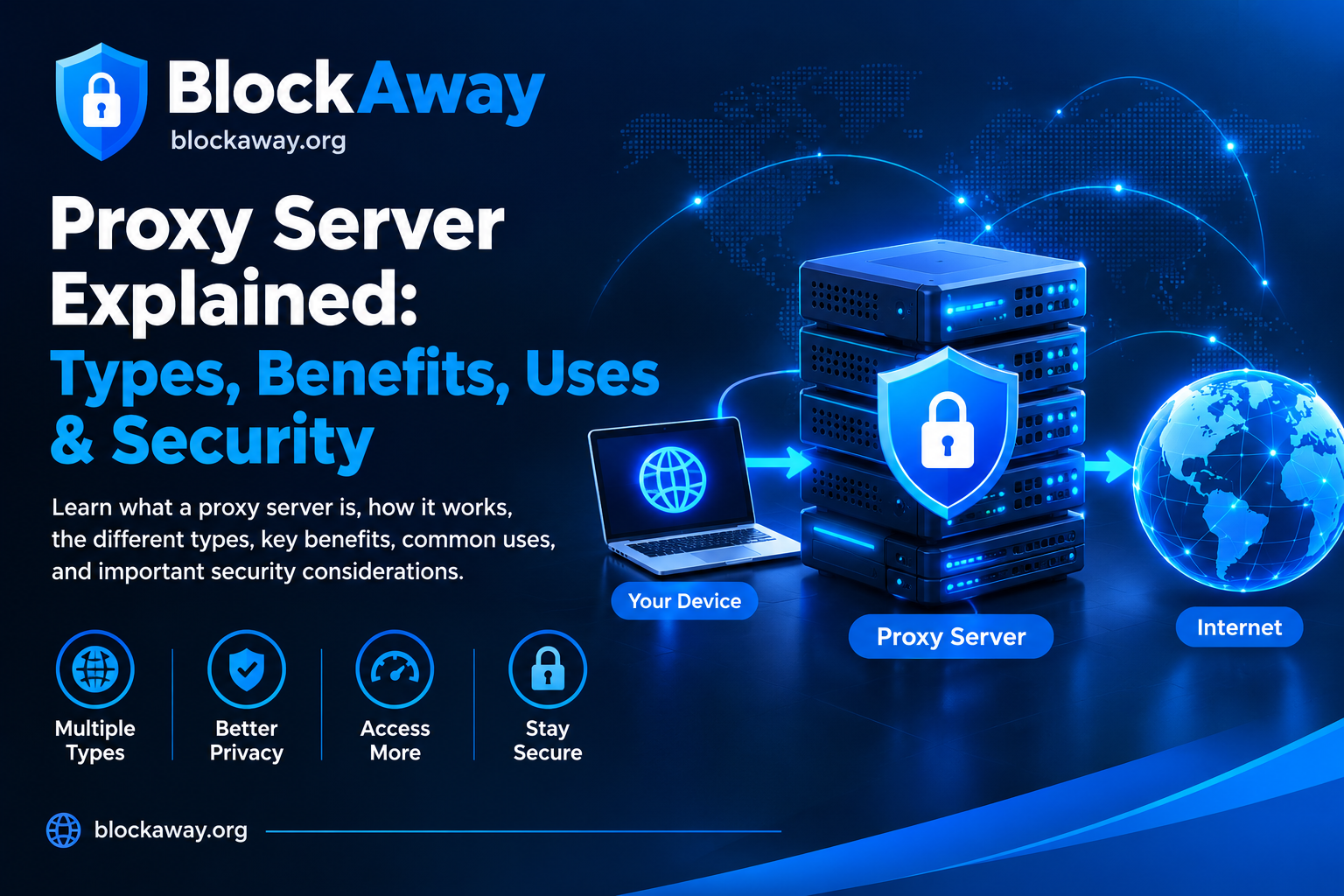
Croxy Proxy is a name associated with browser-based web proxy technology. Web proxies provide an intermediary connection between a user’s browser and a destination website. They can be used to request compatible web content without configuring a traditional proxy connection manually in every browser setting.
Understanding how Croxy Proxy works requires looking beyond its basic purpose. Proxy technology involves network routing, browser compatibility, privacy considerations, encryption, website restrictions, and several technical limitations. A proxy can change the path a web request takes, but it does not automatically make every online activity anonymous or secure.
This guide explains Croxy Proxy, how browser-based proxies generally work, their common uses, their differences from VPNs, and the important considerations users should understand before using any web proxy service.
What Is Croxy Proxy?
Croxy Proxy is a web proxy service associated with browser-based access to websites. A web proxy acts as an intermediary between a user and a requested destination.
In a direct connection, a browser sends a request to a website. With a web proxy, the request is processed through an intermediary service before the destination’s response is returned to the browser.
The simplified connection looks like this:
User’s Browser → Web Proxy → Destination Website
The proxy receives a request and attempts to communicate with the destination website. Depending on the service’s implementation, it may process the response and deliver compatible content to the user’s browser.
The exact behavior depends on the proxy infrastructure, the destination website, and the technologies used by the website.
How Does Croxy Proxy Work?
Browser-based proxy services generally follow a sequence of steps when a user requests a website.
1. Enter a Website Address
The user provides the URL of the website they want to visit through the proxy interface.
2. Submit the Request
The browser sends the request to the proxy service rather than directly requesting the destination page.
3. The Proxy Processes the Request
The proxy attempts to establish a connection with the requested website. It may need to handle redirects, scripts, cookies, and other components depending on the destination.
4. The Destination Returns a Response
If the connection succeeds, the destination website returns a response to the proxy.
5. The Proxy Returns Compatible Content
The proxy processes the response and attempts to make the resulting content available in the user’s browser.
This process can become complicated when a website uses dynamic JavaScript, authentication, real-time connections, browser storage, or third-party resources. Consequently, some websites may work differently through a proxy than they do through a direct connection.
What Is a Browser-Based Proxy?
A browser-based proxy is a service that allows users to submit web requests through a browser interface.
Traditional proxy configurations may require users to enter server details into an operating system, application, or browser. A browser-based proxy can simplify the process by providing an interface for submitting a website address.
However, a browser interface does not eliminate the technical requirements of the underlying connection. The proxy still needs to communicate with the destination and handle the content it receives.
The level of compatibility varies between services and websites.
Common Uses of Web Proxy Services
Web proxy services have several potential applications.
Accessing Compatible Web Content
A proxy can provide an alternative route for requesting websites that support the proxy’s connection method. Whether a particular website works depends on its configuration and any restrictions imposed by its operator.
Learning About Web Networking
Proxy technology provides a useful example of intermediary communication. It helps explain how browsers, web servers, HTTP requests, responses, and network routes interact.
Website Testing
Developers and testers may use proxy infrastructure to investigate how websites respond to requests coming through an intermediary. Professional testing may require additional tools and controls beyond a public browser-based proxy.
Understanding Network Restrictions
Proxy services are sometimes discussed in relation to network restrictions. However, a proxy cannot guarantee access to a restricted website. Network administrators and website operators may block proxy traffic, and users should follow applicable policies and laws.
Does Croxy Proxy Hide Your IP Address?
A proxy may change the public IP address that a destination website sees for a particular connection.
For example, when a website receives a request from a proxy server, it may see the proxy server’s IP address rather than the user’s original public IP address.
However, the result depends on the proxy’s configuration and the type of request being processed. It should not be assumed that every connection or browser feature follows the same route.
Changing the apparent IP address also does not remove every method of identifying a user.
Websites may use cookies, account logins, browser characteristics, session identifiers, and other technical signals. Therefore, an IP address change is not equivalent to complete anonymity.
Is Croxy Proxy Completely Anonymous?
No proxy should automatically be considered a guarantee of complete anonymity.
Online privacy involves multiple factors, including the information a browser sends, the accounts a user signs into, the data a website collects, and the way an intermediary service handles requests.
For example, a website may still recognize an authenticated user even if the request reaches it through a proxy. Cookies and browser characteristics may also contribute to recognition.
Users should avoid relying on absolute claims such as “100% anonymous” or “completely untraceable.” A realistic understanding of privacy requires considering the entire connection rather than only the IP address.
Croxy Proxy vs VPN
A web proxy and a virtual private network (VPN) serve different networking purposes.
A browser-based web proxy generally handles web requests through an intermediary service. Depending on its implementation, its functionality may be limited to the requests submitted through the proxy.
A VPN can establish a broader network connection between a device and a VPN server. The traffic routed through that connection depends on the VPN configuration.
The main differences concern scope, configuration, traffic handling, and the security properties of the connection.
Neither technology guarantees complete anonymity. Users should choose between them based on their actual needs rather than assuming that they provide identical protection.
Does a Web Proxy Encrypt Your Connection?
A proxy does not automatically encrypt all traffic.
Encryption depends on the protocols and connections involved. HTTPS is designed to protect information exchanged between compatible endpoints by encrypting the connection.
When using a proxy, users should understand which parts of the connection are encrypted and whether the destination website uses HTTPS.
A proxy should not be treated as a replacement for secure connections, device protection, or responsible handling of sensitive information.
Why Might Some Websites Not Work Through Croxy Proxy?
Modern websites use a variety of technologies, and a proxy may not support every feature required by a particular destination.
Common causes of compatibility problems include:
- JavaScript applications that depend on complex browser behavior
- Cookies and session management
- Login and authentication systems
- WebSockets and real-time communication
- CAPTCHA and anti-bot protections
- Redirects and embedded resources
- Content security policies
- Third-party APIs and scripts
- File uploads or downloads
- Browser-specific features
A website may load partially, display incorrectly, or fail to load. These issues do not necessarily indicate that the user’s browser is broken; the destination and proxy may simply be incompatible.
Can a Proxy Be Used for Video Websites?
Video websites often use complex playback systems involving JavaScript, media delivery networks, authentication, advertisements, and content licensing restrictions.
A proxy may support some video-related requests but fail to handle others. Playback can depend on the service’s capabilities, the destination website, network performance, and the user’s region.
No general-purpose proxy should be assumed to support every video platform or every playback feature.
Users should also respect the content rules and access conditions of the websites they visit.
Speed and Performance Considerations
Using a proxy can affect browsing performance.
A request may pass through an additional server before reaching its destination, adding network latency. Performance can also be affected by server capacity, congestion, distance, destination response time, and the amount of data being processed.
A proxy may perform adequately for a simple page but struggle with a large or interactive website.
There is no universal speed guarantee for all proxy services, users, or destinations.
Privacy Policy and Data Handling
Before using any proxy service, users should review its current privacy policy.
Important questions include:
- What information does the service collect?
- Does it process connection or request information?
- Are cookies or session information involved?
- Does the service retain operational logs?
- How long is information retained?
- How can users contact the operator about privacy concerns?
Different services have different policies and technical practices. It would be inaccurate to assume that all proxies collect the same information or that every proxy keeps no logs.
Users should avoid submitting sensitive information through a service unless they understand the relevant security and privacy considerations.
Is It Safe to Use a Web Proxy?
The safety of a proxy depends on its implementation, the destination website, the type of information involved, and the user’s behavior.
A proxy is not automatically unsafe, but it should not be treated as a complete security solution either.
For safer browsing:
- Check that the destination uses HTTPS when appropriate.
- Avoid entering sensitive credentials on unfamiliar websites.
- Keep your browser and operating system updated.
- Use strong, unique passwords.
- Enable multi-factor authentication where available.
- Be cautious about downloads and suspicious links.
- Review the proxy provider’s privacy information.
- Do not ignore browser security warnings.
These precautions remain important whether a user browses directly or through a proxy.
Free Proxy Services: Benefits and Limitations
Free proxy services can be convenient for basic web access, experimentation, and learning about proxy technology.
However, free services may have limitations involving server capacity, speed, availability, website compatibility, and customer support. Privacy practices can also differ significantly from one provider to another.
Free access alone does not prove that a service is secure, insecure, private, or unsuitable. Users should evaluate the actual service and avoid making assumptions based solely on its price.
Responsible Use of Croxy Proxy
Proxy technology can support legitimate browsing, research, testing, and education. It can also be misused.
Users should respect applicable laws, website terms, copyright rules, and network policies. A proxy should not be used to facilitate fraud, harassment, unauthorized access, or attacks against computer systems.
Users remain responsible for the requests they make and the information they submit while using an intermediary service.
Frequently Asked Questions
What is Croxy Proxy?
Croxy Proxy is a name associated with browser-based web proxy access. A web proxy processes requests through an intermediary rather than relying solely on a direct connection between the browser and destination.
Does Croxy Proxy require a separate application?
Browser-based proxy services generally provide a web interface for submitting requests, so basic use may not require a separate proxy application. Specific requirements depend on the service.
Does Croxy Proxy guarantee complete anonymity?
No. A proxy cannot guarantee complete anonymity. Websites may still recognize users through accounts, cookies, browser characteristics, and other information.
Is Croxy Proxy the same as a VPN?
No. A web proxy and a VPN have different scopes and networking behavior. A proxy should not automatically be treated as a substitute for a VPN.
Why does a website fail to load through a proxy?
The destination may rely on scripts, cookies, authentication, security systems, or other technologies that are not fully supported by the proxy.
Does a proxy automatically encrypt all internet traffic?
No. Encryption depends on the protocols and connections involved. A browser-based proxy should not be assumed to encrypt every connection made by a device.
Should I use a proxy for sensitive accounts?
Users should carefully consider the service’s security and privacy properties before entering sensitive information. A proxy is not automatically appropriate for banking, confidential work, or other high-risk activities.
Final Thoughts
Croxy Proxy provides an example of how browser-based proxy technology can act as an intermediary between a user and a destination website. Understanding this technology requires considering not only how requests are routed, but also how websites handle cookies, authentication, encryption, dynamic content, and security restrictions.
Web proxies can be useful for learning, testing, and requesting compatible web content. However, they do not guarantee complete anonymity, universal website compatibility, or complete security.
Anyone considering a proxy service should review its current policies, understand its limitations, protect sensitive information, and follow applicable laws and website terms. These principles apply to Croxy Proxy and to web proxy services generally.