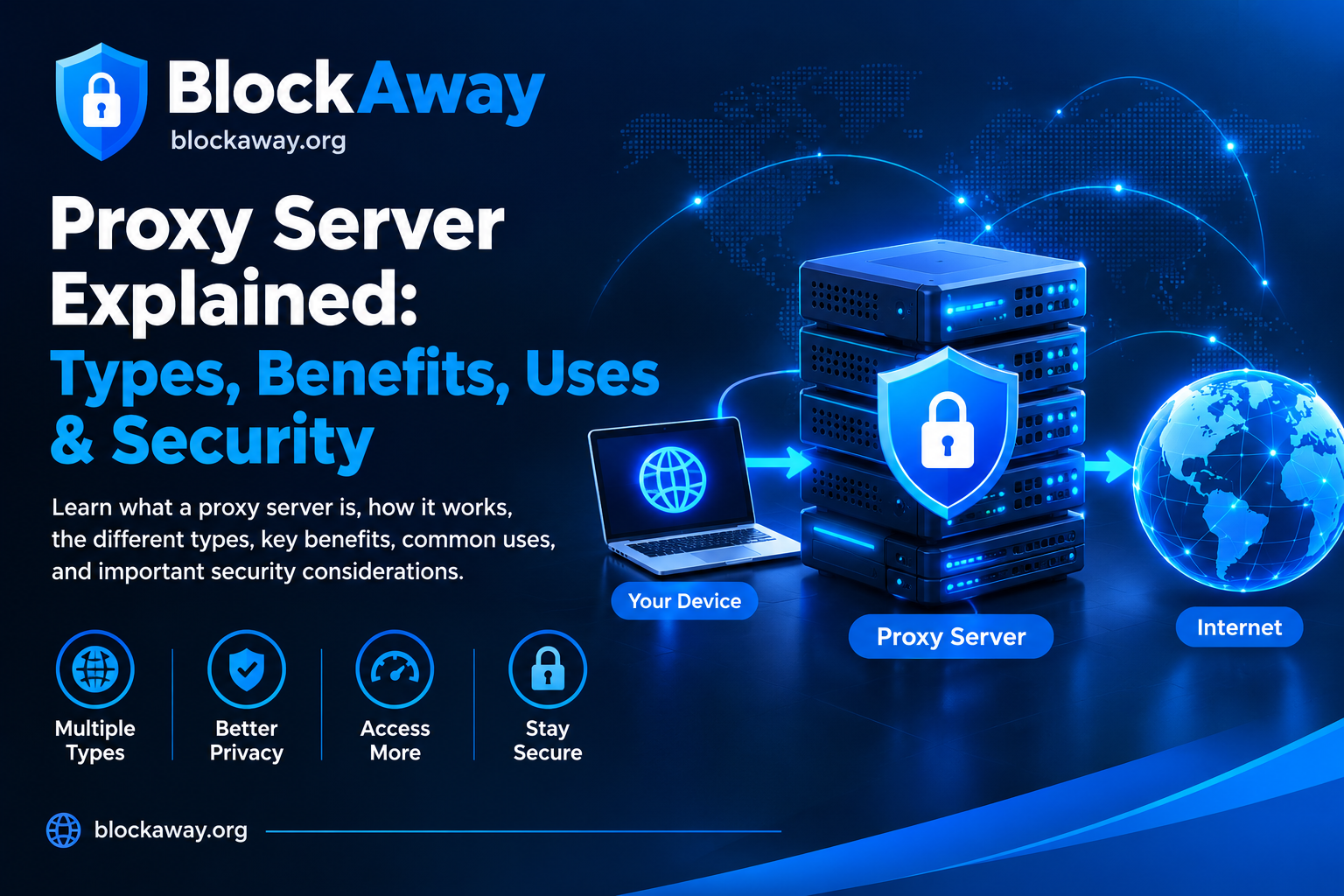
Proxy Server vs VPN: What’s the Difference and Which One Should You Use?
Proxy servers and VPNs are two technologies that can change how internet traffic travels between a device and online services. They are often mentioned together because both can provide an intermediary connection, but they work differently and are designed for different purposes.
Understanding the difference between a proxy server and a VPN can help you choose the right technology for web browsing, privacy, security, testing, and everyday internet use.
In this guide, we explain what proxies and VPNs are, how they work, their major differences, advantages, limitations, and which option may be appropriate for different situations.
What Is a Proxy Server?
A proxy server acts as an intermediary between a client and a destination server.
Instead of sending a request directly to a website, the client can send the request through the proxy.
The simplified connection looks like this:
Your Device → Proxy Server → Website
The proxy receives the request and communicates with the destination according to its configuration.
Web proxies are commonly used through a browser. A user may enter a website address into a proxy interface, after which the service attempts to retrieve the requested content.
What Is a VPN?
VPN stands for Virtual Private Network.
A VPN generally creates an encrypted connection between a device and a VPN server. Internet traffic routed through the VPN can then travel through that connection before reaching online destinations.
A simplified model is:
Your Device → Encrypted VPN Connection → VPN Server → Internet
Unlike a basic web proxy vs VPN can typically handle traffic from multiple applications on a device, depending on the VPN configuration.
Proxy vs VPN: The Main Difference
The biggest difference is the scope and architecture of the connection.
A web proxy usually focuses on particular web requests or application traffic.
A VPN generally operates at a broader network level and can route traffic from many applications through the VPN connection.
This means a proxy can be convenient for a specific web task, while a VPN may be more appropriate when a user wants broader network-level protection.
How a Proxy Works
When a proxy is used, the browser or application sends a request to the proxy server.
The proxy then makes a request to the destination.
For example:
Browser → Proxy → Website
The website may see the proxy server as the source of the request, depending on the proxy configuration.
The response then travels back through the proxy toward the client.
The exact process depends on the proxy type and implementation.
How a VPN Works
A VPN client establishes a connection with a VPN server.
The VPN software creates a tunnel between the device and the VPN server. Traffic sent through the VPN is transported through this tunnel.
The VPN server then communicates with internet destinations.
This creates a broader connection:
Device → VPN Tunnel → VPN Server → Destination
Because the VPN typically operates at the network level, it can support traffic from multiple applications.
Privacy Differences
Privacy is one of the main reasons people compare proxies and VPNs.
A proxy may change the network path for specific requests. A VPN can route broader device traffic through its server.
However, neither technology should automatically be considered a guarantee of complete anonymity.
Online privacy can involve:
IP addresses
Cookies
Browser fingerprinting
Login accounts
Tracking scripts
Device characteristics
DNS requests
Application identifiers
A VPN or proxy addresses only some parts of this larger picture.
Encryption Differences
One of the most important distinctions is encryption.
Many VPN services are specifically designed to provide encrypted tunnels between the device and the VPN server.
A simple web proxy does not necessarily provide the same type of device-wide encrypted tunnel.
HTTPS can still protect data between a browser and an HTTPS website, but users should not assume that every proxy connection provides complete end-to-end protection.
This is why users should understand exactly what a proxy service does before relying on it for sensitive information.
Proxy Speed vs VPN Speed
Both proxies and VPNs can affect browsing speed.
A proxy may sometimes feel faster because it handles a narrower portion of traffic.
A VPN can introduce additional processing because traffic may be encrypted and routed through a VPN server.
However, actual performance depends on:
Server location
Server capacity
Network congestion
Encryption technology
Destination website
User’s internet connection
Proxy or VPN architecture
Therefore, neither technology is automatically faster in every situation.
When Should You Use a Proxy?
A proxy can be useful when you need an intermediary for a specific web-related task.
Examples include:
Web Testing
Developers may use proxy infrastructure to test publicly accessible websites under different network conditions.
Research
Researchers can use proxies to examine how web resources respond to different network paths.
Browser-Based Access
A browser-based proxy can be convenient when a user only needs a web interface rather than device-wide routing.
Development and Troubleshooting
Proxies can be useful for understanding HTTP requests and responses during development and testing.
When Should You Use a VPN?
A VPN may be more appropriate when you want broader device-level network routing.
Examples include:
Public Wi-Fi
A VPN can provide an encrypted connection between your device and the VPN server when using untrusted networks.
Multiple Applications
A VPN can route traffic from multiple applications instead of only a particular browser request.
General Network Privacy
Some users choose VPN services as part of a broader privacy strategy.
Remote Access
Organizations commonly use VPN technologies to provide secure access to internal resources.
Can a Proxy Replace a VPN?
Usually, no.
A basic web proxy and a VPN are designed differently.
If you only need to send a particular web request through an intermediary, a proxy may be sufficient.
If you want broader device-level traffic routing and an encrypted connection to a VPN server, a VPN may be more suitable.
The correct choice depends on the goal.
Can a VPN Replace a Proxy?
Sometimes, but not always.
A VPN can perform many tasks for which people use proxies, but proxy servers have specialized uses.
For example, developers, network administrators, and businesses may use different types of proxy infrastructure for testing, traffic management, or application-specific requirements.
Therefore, VPNs and proxies should be viewed as related but distinct technologies.
Are Free Proxies Safe?
Not necessarily.
Free proxy services vary considerably in their privacy practices, security, reliability, and infrastructure.
Before using a free proxy, check:
Privacy policy
Logging practices
HTTPS availability
Provider transparency
Data collection
Advertising practices
Service reputation
Avoid entering sensitive credentials into an unfamiliar proxy.
Are Free VPNs Safe?
Free VPNs also require caution.
Operating a VPN service requires infrastructure, bandwidth, maintenance, and security resources. Users should understand how a free provider supports its service.
Before choosing a VPN, investigate its privacy policy, security practices, ownership, and reputation.
A free service is not automatically unsafe, but it should not automatically be trusted either.
Proxy and VPN Security Tips
Whether you use a proxy or VPN, basic security practices remain important.
Keep Your Browser Updated
Security updates can protect against known browser vulnerabilities.
Use HTTPS Websites
Whenever possible, use websites that support HTTPS.
Avoid Suspicious Downloads
Do not download unknown files simply because they are accessible through a proxy or VPN.
Protect Your Accounts
Use strong passwords and multi-factor authentication where available.
Review Provider Policies
Understand what information your proxy or VPN provider collects and how it handles that information.
Proxy vs VPN for Mobile Users
Mobile users can use both technologies.
A browser-based proxy may be convenient when the user only wants to route specific web requests.
A VPN application can typically route traffic from the entire mobile device, depending on the operating system and VPN configuration.
For everyday mobile security, users should also remember that a VPN does not protect against phishing, malicious applications, weak passwords, or unsafe websites.
Proxy vs VPN for Desktop Users
Desktop users can also choose between both technologies.
A web proxy may be convenient for a browser-based task.
A VPN may be preferable when multiple applications need to use the same protected network connection.
The best choice depends on the intended use rather than simply choosing the technology with the strongest marketing claims.
Proxy vs VPN for Businesses
Businesses often use both proxies and VPNs, but for different reasons.
VPNs can provide secure remote access to organizational networks.
Proxy infrastructure can be used for:
Web filtering
Traffic management
Security monitoring
Testing
Network administration
Application-specific routing
Large organizations may use multiple networking technologies simultaneously.
Important Privacy Considerations
A proxy or VPN provider can potentially see certain connection information.
The exact information available depends on the technology and configuration.
Therefore, provider trust is important.
Before selecting a service, review:
Privacy policy
Data retention
Logging policy
Jurisdiction
Security practices
Company transparency
Users should avoid assuming that simply connecting through another server makes them completely anonymous.
Common Misconceptions About VPNs and Proxies
Myth 1: A VPN Makes You Completely Anonymous
A VPN can improve network privacy, but websites may still identify users through accounts, cookies, browser characteristics, and other mechanisms.
Myth 2: Every Proxy Is Anonymous
Proxy anonymity depends on the proxy’s configuration and what information it forwards.
Myth 3: Free Means Better
Free services can be useful, but users should evaluate their privacy and security practices rather than choosing solely based on price.
A browser proxy may only affect specific browser traffic. It does not necessarily route every application on the device.
AllProxy and Web Proxy Access
AllProxy is designed around a simple web-based interface for entering website addresses.
A web-based proxy interface can be useful when the goal is straightforward browser-based access.
However, users should understand that an online proxy is not the same as a device-wide VPN.
For sensitive activities, users should choose security tools appropriate to the task and avoid entering confidential credentials into unfamiliar third-party services.
Frequently Asked Questions
What is the difference between a proxy and a VPN?
A proxy generally acts as an intermediary for specific web or application traffic, while a VPN usually creates a broader encrypted network connection for the device.
Is a VPN safer than a proxy?
For many network-security scenarios, a properly configured VPN provides broader protection because it can create an encrypted tunnel between the device and VPN server. However, security also depends on the provider and configuration.
Is a proxy faster than a VPN?
Not always. Speed depends on server location, capacity, network conditions, encryption, and destination websites.
Can I use both a proxy and a VPN?
It is technically possible in some configurations, but combining them is not automatically better and can introduce additional complexity and performance overhead.
Can a proxy hide my IP address?
A proxy may cause a destination website to see the proxy’s IP address instead of the user’s direct IP address, depending on the configuration.
Does a VPN hide my IP address?
A VPN typically causes internet destinations to see the VPN server’s public IP address rather than the user’s direct public IP address.
Can a proxy protect me on public Wi-Fi?
A basic proxy should not be considered a complete security solution for public Wi-Fi. A properly configured VPN can provide an encrypted connection between the device and VPN server.
Should I use a proxy or VPN?
Choose based on your goal. A proxy can be useful for specific web requests, while a VPN may be more suitable for broader device-level network protection.
Final Verdict
Proxy servers and VPNs are useful networking technologies, but they are not interchangeable.
A proxy can be a convenient intermediary for specific web requests and technical tasks.
A VPN generally provides broader device-level traffic routing and can establish an encrypted connection to a VPN server.
For simple browser-based use, a web proxy may be sufficient. For broader network protection, a reputable VPN may be the more appropriate choice.
Regardless of which technology you use, privacy and security depend on more than the network route. Choose reputable services, keep your software updated, use HTTPS, protect your accounts, and avoid entering sensitive information into unfamiliar proxy services.