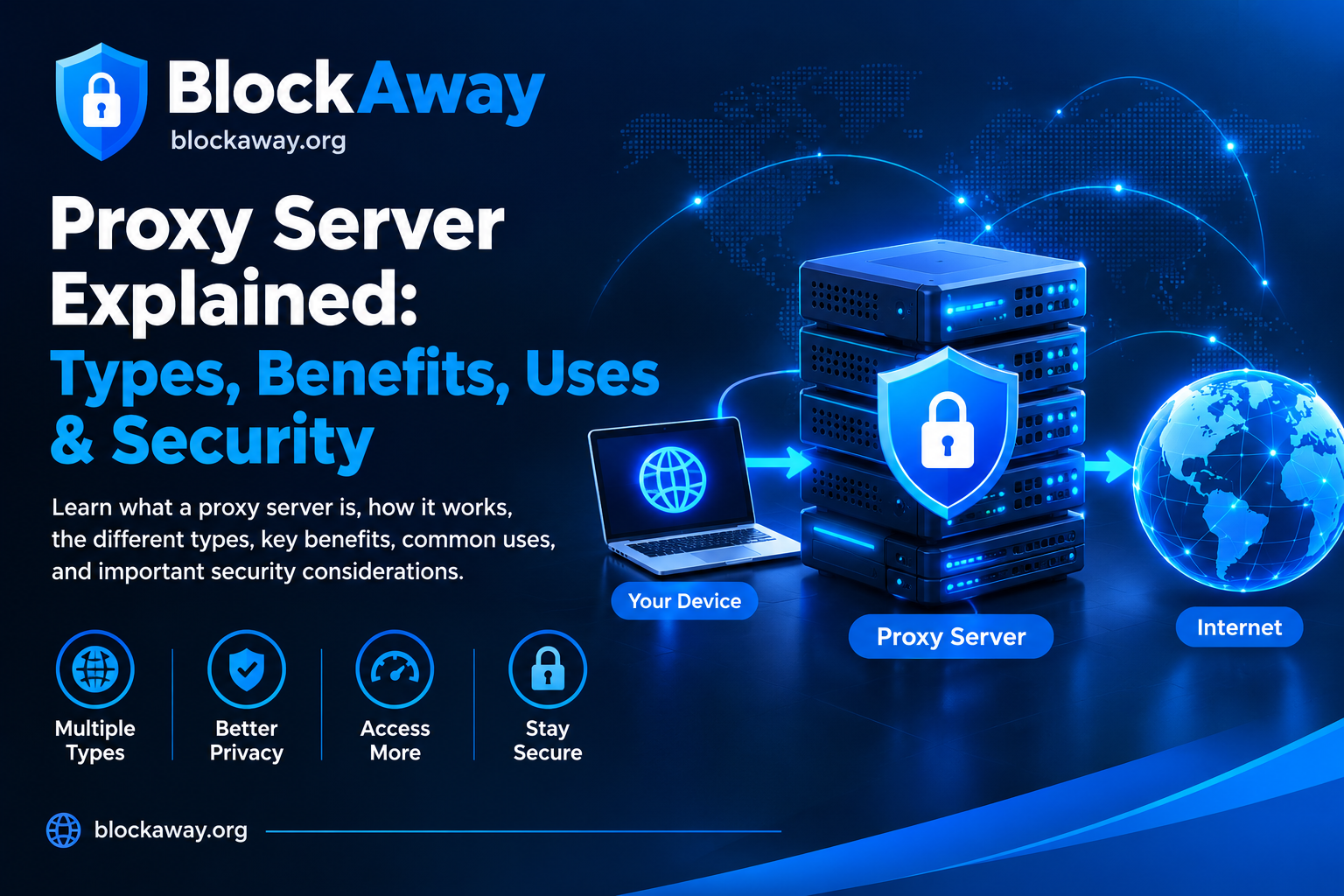
The internet provides access to educational resources, news, entertainment, and online tools. However, users may sometimes experience website access restrictions, network limitations, or concerns about how their browsing requests are handled. A browser-based proxy is one tool that can help users route supported web requests through an intermediary.
BlockAway is a name associated with web proxy searches. Before using any proxy service, users should understand its potential benefits, limitations, and privacy implications.
In this guide, we explain the benefits of browser-based proxies like BlockAway, how they work, when they may be useful, and what to consider before using one.
What Is a Browser-Based Proxy?
A browser-based proxy is a service that allows users to send supported website requests through an intermediary, often using a web interface in their browser.
Instead of connecting directly to a destination website, a request is processed by the proxy service. If the request is supported, the proxy retrieves the content and returns it to the user.
Some browser-based proxies allow users to enter a website address into a form and open the requested page through the service. The exact interface and supported features depend on the provider.
A browser-based proxy differs from a traditional proxy configuration because users may not need to change their device’s network settings or install separate proxy software.
However, a browser-based proxy does not necessarily route every connection from the device. Its coverage depends on how the service is implemented.
How Does a Browser-Based Proxy Like BlockAway Work?
The general process involves three main steps.
Step 1: Open the Proxy Website
The user visits the proxy service in a browser. If the service provides a website-address field, the user enters the address they want to access.
Step 2: The Proxy Processes the Request
The proxy attempts to retrieve the requested content according to its technical configuration and the destination website’s requirements.
Some websites may not work correctly because they rely on scripts, login sessions, security checks, or other features that the proxy does not support.
Step 3: View the Returned Content
If the request succeeds, the proxy displays the supported website content in the browser.
Depending on the configuration, the destination website may see the proxy server’s IP address rather than the user’s original public IP address. This does not guarantee complete anonymity or prevent every form of online tracking.
The actual features of BlockAway should be confirmed on the relevant website rather than assumed from the general behavior of browser-based proxies.
10 Benefits of Using a Browser-Based Proxy Like BlockAway
Browser-based proxies can be convenient for certain browsing tasks. Their usefulness depends on the service, the destination website, and the user’s requirements.
1. Convenient Browser Access
One potential advantage of a browser-based proxy is convenience.
Some services allow users to enter a destination URL directly into a webpage. This can be simpler than manually configuring a proxy server, particularly for people who only need to test a supported browsing task.
The available setup options vary by provider, and not every proxy works without additional configuration.
2. No Separate Proxy Application May Be Needed
Some browser-based proxies operate through a website interface, so users may not need to install a dedicated application.
This can be useful when someone wants to try a supported proxy service without changing the network configuration of their entire device.
However, users should avoid installing unknown extensions or applications if a website unexpectedly requests them.
A correctly configured proxy may cause a destination website to see the proxy server’s IP address instead of the user’s original public IP address for requests routed through it.
This can reduce the direct IP address information exposed to that destination.
IP address masking is not the same as complete anonymity. Websites may still recognize users through account logins, cookies, browser characteristics, or information submitted through forms.
4. An Alternative Route for Supported Web Requests
A proxy sends supported requests through an intermediary rather than directly to the destination website.
In some circumstances, this may provide an alternative route for accessing a webpage. Whether it works depends on the proxy’s availability, network conditions, and the destination website’s restrictions.
It is not a guarantee that every blocked or restricted website will become accessible.
5. Useful for Basic Proxy Learning
Browser-based proxies can help users understand basic networking concepts.
By learning how a request passes through a proxy, users can explore topics such as IP addresses, intermediary servers, website requests, and the differences between direct and proxied connections.
These concepts are useful for people studying web technologies, networking, and online privacy.
6. May Reduce the Need for Manual Configuration
Some browser-based services provide a simple interface that handles the proxy request on the service’s side.
This may be easier for basic browsing tasks than configuring a proxy manually in an operating system or application.
The trade-off is that users may have less control over connection settings, supported protocols, and advanced features.
7. Can Be Useful for Basic Website Compatibility Testing
Developers and website owners may use proxy-based tools to understand how a website behaves when requests arrive through an intermediary.
For example, they may investigate whether certain pages load, whether redirects behave as expected, or whether a proxy affects website functionality.
A browser-based proxy is not a replacement for a comprehensive testing environment, and results may differ from a direct browser connection.
8. May Offer Access Without a Paid VPN Subscription
Some browser-based proxy services are available without a paid subscription. This can make them an option for limited, non-sensitive browsing tasks.
Availability, usage limits, advertisements, and other terms vary by provider.
Free access should not be confused with guaranteed security or privacy. Review the service’s policies before using it.
9. Can Help Explain Online Privacy Concepts
Using a proxy provides an opportunity to learn the difference between IP address masking, encrypted connections, browser tracking, and account-based identification.
These concepts are important because no single tool protects every aspect of a user’s online identity.
A proxy may change how a supported request reaches a destination, but other tracking methods may continue to operate.
10. Can Be an Option for Specific Browsing Needs
A browser-based proxy may be useful when a user needs a simple way to route supported web requests through an intermediary.
Whether it is the right tool depends on the task. Users who require device-wide traffic routing, advanced configuration, or stronger network-level protections may need to evaluate other options.
Always compare the actual features of a service with your requirements.
Is BlockAway Safe to Use?
Safety depends on the particular website’s implementation, security practices, and data-handling policies. The name of a proxy service alone is not enough to determine whether it is safe.
Before using BlockAway or another browser-based proxy, consider the following precautions.
Review the Privacy Policy
Look for information about what data the service collects, how it uses that data, how long it retains it, and whether it shares information with third parties.
If the policy is missing or unclear, avoid submitting sensitive information.
Use HTTPS Websites
HTTPS helps protect the connection between your browser and the relevant website endpoint. However, the protection available through a proxy depends on how the connection is implemented and whether the proxy can inspect or modify traffic.
Never ignore certificate warnings.
Avoid Sensitive Activities
Do not use an unfamiliar proxy to access banking accounts, submit payment information, or handle confidential work documents.
The proxy operator may process requests passing through the service, depending on its configuration.
Be Careful With Downloads
Files accessed through a proxy may still contain malware or other unwanted software.
Download files only from sources you trust, keep your browser updated, and use appropriate security protections.
Understand the Limitations
A proxy does not automatically prevent tracking, remove account identifiers, block malware, or guarantee anonymity.
Choose a service based on documented capabilities rather than broad promises.
Browser-Based Proxy vs. VPN
A browser-based proxy and a virtual private network (VPN) are different technologies.
Browser-based proxy
Handles requests supported by the proxy interface or implementation.
May require little or no manual configuration.
May mask the user’s original public IP address from a destination website for supported requests.
Does not necessarily route all device traffic.
VPN
Typically creates an encrypted tunnel for traffic covered by its configuration.
May route traffic from multiple applications, depending on the setup.
Can help protect covered traffic on untrusted networks.
Does not guarantee complete anonymity or prevent all website tracking.
Neither option is automatically best for every situation. Consider the type of traffic you need to route, the security protections required, and the provider’s privacy practices.
Browser-Based Proxy vs. Traditional Proxy Configuration
A browser-based proxy typically offers access through a website interface, while a traditional proxy may require users to enter server details into a browser, operating system, or application.
A manually configured proxy can provide more control over connection settings, depending on the software and protocol.
A browser-based service may be simpler for occasional tasks, but it may support fewer options or work only with particular websites.
The best choice depends on technical requirements, compatibility, and how much configuration control is needed.
Common Limitations of Browser-Based Proxies
Although browser-based proxies can be convenient, they also have limitations.
Some Websites May Not Load
Websites that depend on complex scripts, authentication, or security checks may not function correctly through a proxy.
Browsing May Be Slower
Requests pass through an additional server, which can introduce latency. Actual performance depends on the proxy’s capacity, location, routing, and network conditions.
Privacy Practices May Differ
The proxy provider may process connection data. Users should review its privacy policy rather than assuming that every proxy service follows the same data practices.
Not Every Application Is Covered
A browser-based proxy generally handles the requests supported by its interface. Other applications on the device may continue to connect directly to the internet.
Access Is Not Guaranteed
A destination website may block proxy traffic or apply additional restrictions. A proxy cannot guarantee access to every website.
A browser-based proxy may be worth considering for users who:
Want to learn how proxy technology works.
Need a convenient interface for supported web requests.
Want to test basic website compatibility.
Prefer not to configure a traditional proxy for an occasional task.
Understand the privacy and security limitations.
It may not be suitable for sensitive transactions, confidential work, or situations requiring comprehensive device-wide traffic protection.
Tips for Using a Browser-Based Proxy More Responsibly
Follow these practices when evaluating a proxy service:
Confirm that you are visiting the correct domain.
Read the service’s privacy policy and terms of use.
Avoid sharing sensitive information through an unfamiliar provider.
Keep your browser and operating system updated.
Do not install unknown applications or extensions.
Use HTTPS websites and pay attention to security warnings.
Follow applicable laws and the destination website’s rules.
Do not assume that a masked IP address guarantees anonymity.
These steps can help you make a more informed decision about whether a proxy is appropriate for your intended use.
Frequently Asked Questions
What is a browser-based proxy?
A browser-based proxy is a service that handles supported web requests through an intermediary, often using a website interface in the browser.
What are the main benefits of a browser-based proxy?
Potential benefits include convenient access, less manual configuration, basic IP address masking for supported requests, and an opportunity to learn about proxy technology. Actual capabilities vary by provider.
Does BlockAway hide my IP address?
That depends on the specific service and how it routes requests. A properly configured proxy may show its own IP address to a destination website, but this does not guarantee complete anonymity.
Is a browser-based proxy free?
Some browser-based proxy services offer free access, while others may have paid plans or usage restrictions. Check the provider’s current terms rather than assuming that every service is free.
Is a browser-based proxy better than a VPN?
Not necessarily. A browser-based proxy may be convenient for selected web requests, while a VPN typically routes traffic covered by its configuration through an encrypted tunnel. The right choice depends on your needs.
Can I use a browser-based proxy for online banking?
It is generally best to avoid unfamiliar proxy services for banking and other sensitive activities. Use a trusted connection and follow your financial institution’s security guidance.
Does a browser-based proxy guarantee anonymity?
No. IP address masking does not eliminate cookies, account-based identification, browser fingerprinting, or every other form of tracking.
Conclusion
Browser-based proxies like BlockAway may offer convenience, reduce the need for manual proxy configuration, and provide an alternative route for supported web requests. They can also help users learn about IP addresses and online privacy.
However, the benefits depend on the actual service and its technical implementation. A proxy does not guarantee that every website will load, that all traffic is routed through it, or that a user’s identity remains anonymous.
Before using any browser-based proxy, review its privacy policy, understand its limitations, and avoid sending sensitive information through an unfamiliar service. Informed use is more important than relying on promises of unrestricted access or complete anonymity.