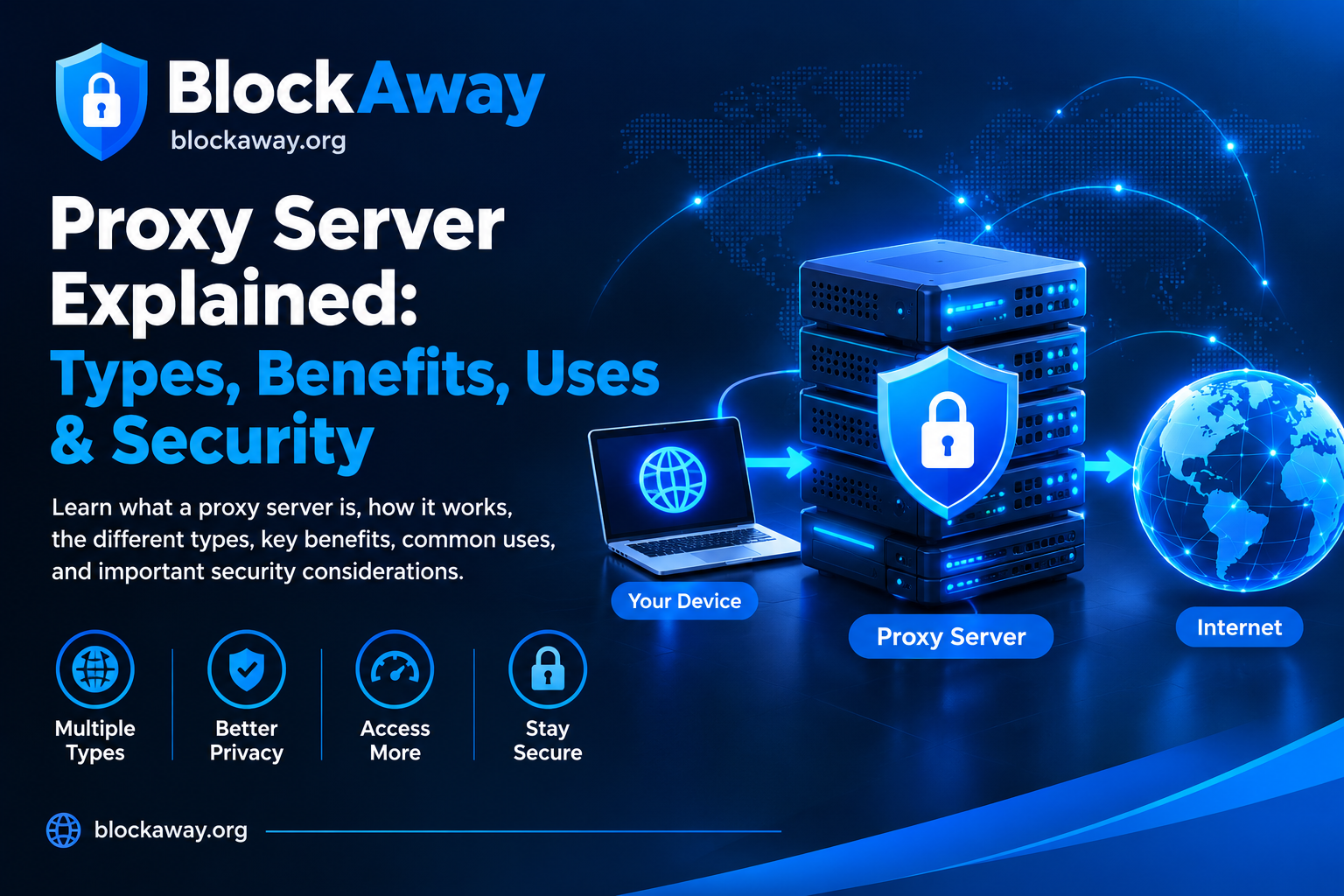
A transparent proxy is a type of proxy server that intercepts and forwards internet traffic without necessarily requiring users to configure their browsers manually. It is commonly used by organizations, schools, businesses, internet service providers, and network administrators to manage web traffic, apply filtering rules, and monitor network activity.
Unlike an anonymous proxy, a transparent proxy does not necessarily hide the user’s original IP address from the destination website. Its primary purpose is often network management, traffic control, filtering, or caching rather than privacy.
In this guide, you will learn what a transparent proxy is, how it works, where it is used, and how it differs from other types of proxy servers.
What Is a Transparent Proxy?
A transparent proxy is an intermediary server that handles web requests without requiring users to explicitly configure their devices to use a proxy. In many deployments, network infrastructure automatically directs traffic through the proxy.
The term “transparent” refers mainly to how the proxy is introduced into the connection from the user’s perspective. It does not mean that the proxy provides complete privacy or that its activity is invisible to network administrators.
Depending on the implementation, a transparent proxy may inspect requests, cache frequently accessed content, enforce website access policies, or record network activity.
How Does a Transparent Proxy Work?
A transparent proxy operates between a user’s device and the destination server. The network may redirect eligible traffic to the proxy automatically.
Here is a simplified explanation of the process:
The user opens a website: A browser sends a request to access a webpage.
The network directs the request: Network equipment routes or redirects the traffic through a transparent proxy.
The proxy processes the request: The proxy applies its configured rules, such as filtering, caching, or access control.
The destination server responds: If the request is allowed, the proxy forwards it to the destination server.
The response returns: The proxy passes the response back to the user’s browser.
The precise behavior depends on the network configuration and the protocols being used. Not every transparent proxy can inspect encrypted HTTPS content, and some implementations can handle only particular types of traffic.
Main Features of a Transparent Proxy
Automatic Traffic Routing
Users often do not need to enter proxy settings in their browsers. Network administrators configure the infrastructure to direct supported traffic through the proxy.
Web Content Filtering
Organizations may use transparent proxies to restrict access to selected websites or categories of online content according to their network policies.
Caching Frequently Requested Content
Some transparent proxies store eligible copies of web resources. When another user requests the same resource, the proxy may serve the cached version instead of retrieving it again.
Caching can reduce bandwidth usage and improve response times when the content is cacheable and the cached version is still valid.
Network Monitoring
A transparent proxy may generate logs containing connection details, requested destinations, timestamps, or other information, depending on its configuration and the available protocol data.
Centralized Policy Enforcement
Network administrators can apply rules across multiple devices without configuring every browser individually.
Schools and colleges may deploy transparent proxies to apply acceptable-use policies, restrict access to selected resources, and manage shared internet connections.
2. Businesses and Offices
Companies may use these proxies to enforce web access policies, monitor network usage, and manage bandwidth across employee devices.
3. Internet Service Providers
Some internet service providers use transparent proxy technologies for traffic management, caching, or other network services. Actual deployment practices vary by provider and region.
4. Public Wi-Fi Networks
A public Wi-Fi operator may use intermediary systems to manage traffic, enforce network policies, or display a login page before granting internet access. However, not every captive portal or public Wi-Fi filtering system is a transparent proxy.
5. Content Filtering Systems
Transparent proxies can be integrated into security gateways that block specified domains, enforce organizational rules, or help manage access to online resources.
Advantages of a Transparent Proxy
Transparent proxies offer several potential benefits:
No manual browser configuration: Supported traffic can be routed automatically.
Centralized management: Administrators can enforce rules across multiple devices.
Bandwidth savings: Caching may reduce repeated downloads of eligible content.
Consistent filtering: Network policies can be applied centrally.
Simplified deployment: Organizations can manage web traffic without individually configuring every user device.
These advantages depend on the proxy’s capabilities, network design, and the type of traffic being processed.
Disadvantages of a Transparent Proxy
Despite their benefits, transparent proxies also have limitations.
Limited Privacy
A transparent proxy is not primarily designed to provide anonymity. The destination website may still receive the user’s public IP address, depending on how the proxy forwards the connection.
Possible Monitoring
The proxy operator may collect information about network activity. Users should understand the privacy policies and monitoring practices of the network they use.
Website Compatibility Issues
Some websites may behave unexpectedly when traffic passes through a proxy. Authentication, cookies, redirects, dynamic content, and other browser features can cause problems.
Performance Bottlenecks
If the proxy server is overloaded or incorrectly configured, it may increase latency or slow down browsing.
HTTPS Limitations
HTTPS encrypts data between the browser and the website. A transparent proxy can often observe connection metadata, but it cannot automatically read encrypted page contents simply because traffic passes through it. Inspecting HTTPS content generally requires additional mechanisms, such as authorized TLS interception and trusted certificate configuration.
Transparent Proxy vs. Anonymous Proxy
Transparent and anonymous proxies differ mainly in their configuration, purpose, and treatment of identifying information.
Feature
Transparent Proxy
Anonymous Proxy
Main purpose
Network management and traffic control
Reducing exposure of the user’s IP address
Manual setup
Often unnecessary
Depends on the service
Original IP visibility
May remain visible to the destination
Usually intended to conceal it
Network monitoring
May be configured for monitoring
Depends on the provider
Privacy protection
Not its primary purpose
Varies by implementation
Typical users
Organizations and network operators
Individual users and organizations
The word “anonymous” does not guarantee complete anonymity. A proxy may expose identifying information through request headers, account activity, browser fingerprinting, or other mechanisms.
A transparent proxy, an anonymous proxy, and a virtual private network (VPN) are not interchangeable technologies.
A transparent proxy is often deployed by a network administrator to manage traffic automatically. An anonymous proxy is generally intended to conceal the user’s original IP address from destination websites.
A VPN creates an encrypted tunnel between a device and a VPN endpoint for the traffic routed through that connection. The VPN provider can still have access to certain connection information, and websites may identify users through cookies, accounts, or browser fingerprinting.
Choosing between these technologies depends on the goal. Network administration, IP address masking, and encrypted traffic transport are different requirements.
Does a Transparent Proxy Hide Your IP Address?
Not necessarily.
In many transparent proxy configurations, the destination website can still identify the user’s public IP address. In other configurations, the destination may see the proxy’s IP address, depending on whether the proxy forwards the request or establishes a separate connection.
Therefore, the term “transparent proxy” alone is not enough to determine whether an IP address is hidden.
Users who need IP address masking should examine the specific service’s technical documentation and privacy practices rather than assuming that any proxy provides anonymity.
Can a Transparent Proxy Read HTTPS Traffic?
A transparent proxy cannot automatically decrypt HTTPS content just by intercepting the network connection.
Without TLS interception, the proxy generally cannot read the encrypted page contents. It may still observe some connection metadata, depending on the protocol and network configuration.
In managed environments, administrators may deploy authorized TLS inspection using trusted certificates on managed devices. This can allow inspection of certain encrypted traffic, but it introduces important privacy, security, and compliance considerations.
Users should be aware of their organization’s monitoring policies, especially when using workplace or school networks.
Is a Transparent Proxy Safe?
A transparent proxy can be a legitimate and useful network management tool, but its safety depends on who operates it, how it is configured, and what information it collects.
Before using a network that routes traffic through a proxy, consider the following precautions:
Avoid entering sensitive information on websites that do not use HTTPS.
Review the network operator’s privacy and acceptable-use policies.
Be cautious when using unfamiliar public Wi-Fi networks.
Do not assume that a transparent proxy makes browsing anonymous.
Keep your browser and operating system updated.
Use trusted security tools and follow your organization’s network policies.
A proxy is not a replacement for secure browsing practices or comprehensive device security.
How to Identify a Transparent Proxy
Identifying a transparent proxy can be difficult because it may operate at the network level without appearing in browser settings.
Possible indicators include:
A network administrator informs users that web traffic is filtered or inspected.
Some websites display network-specific block pages.
A managed network has documented web filtering or caching policies.
Network diagnostics reveal traffic redirection or proxy-related behavior.
These signs are not conclusive on their own. A firewall, DNS filter, captive portal, or other network security system can produce similar behavior.
If you use a workplace, school, or public network, ask the network administrator about its configuration and monitoring policies.
Can You Disable a Transparent Proxy?
A transparent proxy is often configured in the network infrastructure rather than directly on the user’s device. Consequently, changing browser proxy settings may not bypass it.
On a managed network, only an authorized administrator may be able to change the routing or filtering configuration. Users should follow applicable network rules rather than attempting to bypass security controls without permission.
On a personal network, a router or firewall administrator can review the device’s traffic-routing, filtering, and proxy settings to determine whether a transparent proxy is present.
Transparent Proxy and Web Proxy: What Is the Difference?
A web proxy is a broad term for a service that forwards web requests between a user and a destination website. Some web proxies are accessed through a webpage, while others are configured in a browser or network.
A transparent proxy describes how traffic is intercepted or routed, often without explicit user configuration. It can therefore be a type of proxy deployment rather than a completely separate protocol.
For example, a browser-based web proxy may require the user to visit the proxy website and enter a destination URL. A transparent proxy may route supported traffic automatically through network equipment.
The right terminology depends on the proxy’s actual implementation.
Frequently Asked Questions
What is a transparent proxy in simple words?
A transparent proxy is a server that handles internet traffic automatically, usually without requiring users to configure a proxy manually.
Is a transparent proxy anonymous?
No. A transparent proxy does not inherently provide anonymity. Whether a destination website sees the user’s original IP address depends on the specific configuration.
Is a transparent proxy the same as a VPN?
No. A transparent proxy manages or forwards selected traffic, while a VPN creates an encrypted tunnel for the traffic routed through it.
Do transparent proxies work with HTTPS?
They can handle HTTPS connections in different ways, but they cannot automatically read encrypted content without additional authorized inspection mechanisms.
Are transparent proxies used by schools and companies?
Yes. They may be used for web filtering, centralized policy enforcement, traffic monitoring, and caching.
Can a transparent proxy improve internet speed?
It can improve performance when caching is effective or traffic is efficiently managed. However, a poorly configured or overloaded proxy can slow down connections.
Does a transparent proxy protect against malware?
Not automatically. Some proxies are integrated with security filtering systems, but a transparent proxy alone does not guarantee malware protection.
Can I use a transparent proxy to unblock websites?
A transparent proxy is usually deployed by the network operator, not selected by the individual user. Whether a website is accessible depends on the network’s policies and configuration.
Conclusion
A transparent proxy is a useful technology for managing internet traffic, applying web filtering policies, monitoring network activity, and caching eligible content. It is commonly associated with schools, businesses, internet service providers, and managed networks.
However, it should not be confused with an anonymous proxy or a VPN. A transparent proxy does not automatically hide an IP address, encrypt all internet traffic, or guarantee online privacy.
Understanding its purpose and limitations helps users make better decisions about browsing, network security, and privacy.
BlockAway provides informational content about proxy technologies and web access concepts to help readers understand how these tools work and how they differ.