Is Proxy Safe for Banking?
Many users rely on proxies to browse anonymously, access blocked websites or hide their IP address. But when it comes to something sensitive like online banking, a much more important question appears:
Is a proxy safe for banking?
The short answer is:
Usually not the best option.
While proxies can change your visible IP address, they often do not provide the level of security needed for financial transactions. Banking involves passwords, one-time codes, personal details, payment history and highly sensitive data.
This complete guide explains whether proxies are safe for banking, the risks involved, when they may be acceptable, safer alternatives and the best way to protect your money online in 2026.
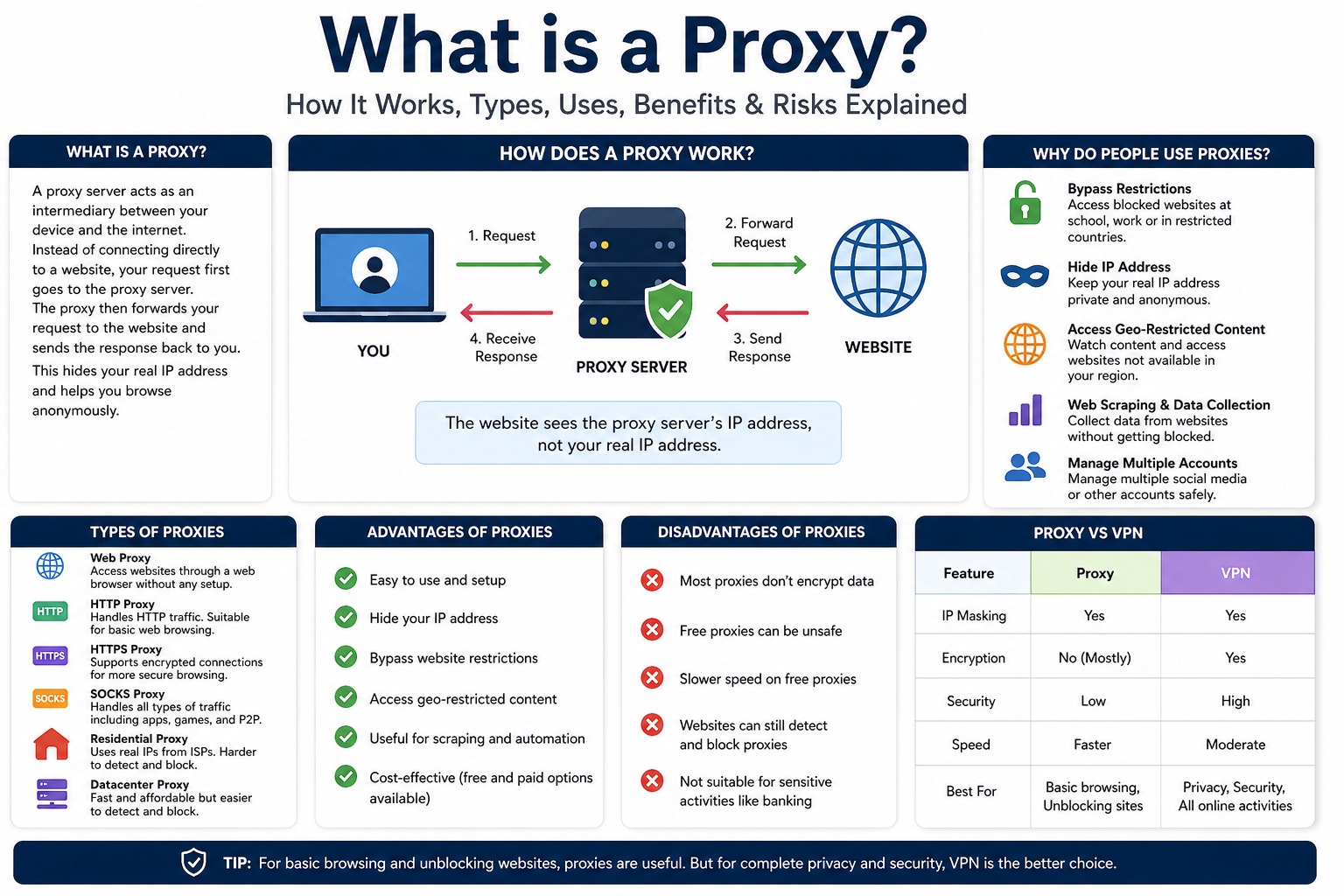
What Is a Proxy?
A proxy server acts as an intermediary between your device and a website.
This means the proxy server can become part of the connection path.
That is exactly why caution is needed for banking.
Why Banking Requires Strong Security
Online banking involves:
- Passwords
- OTP / verification codes
- Card management
- Account balances
- Transfers
- Statements
- Personal identity information
If this information is exposed, the consequences can be serious.
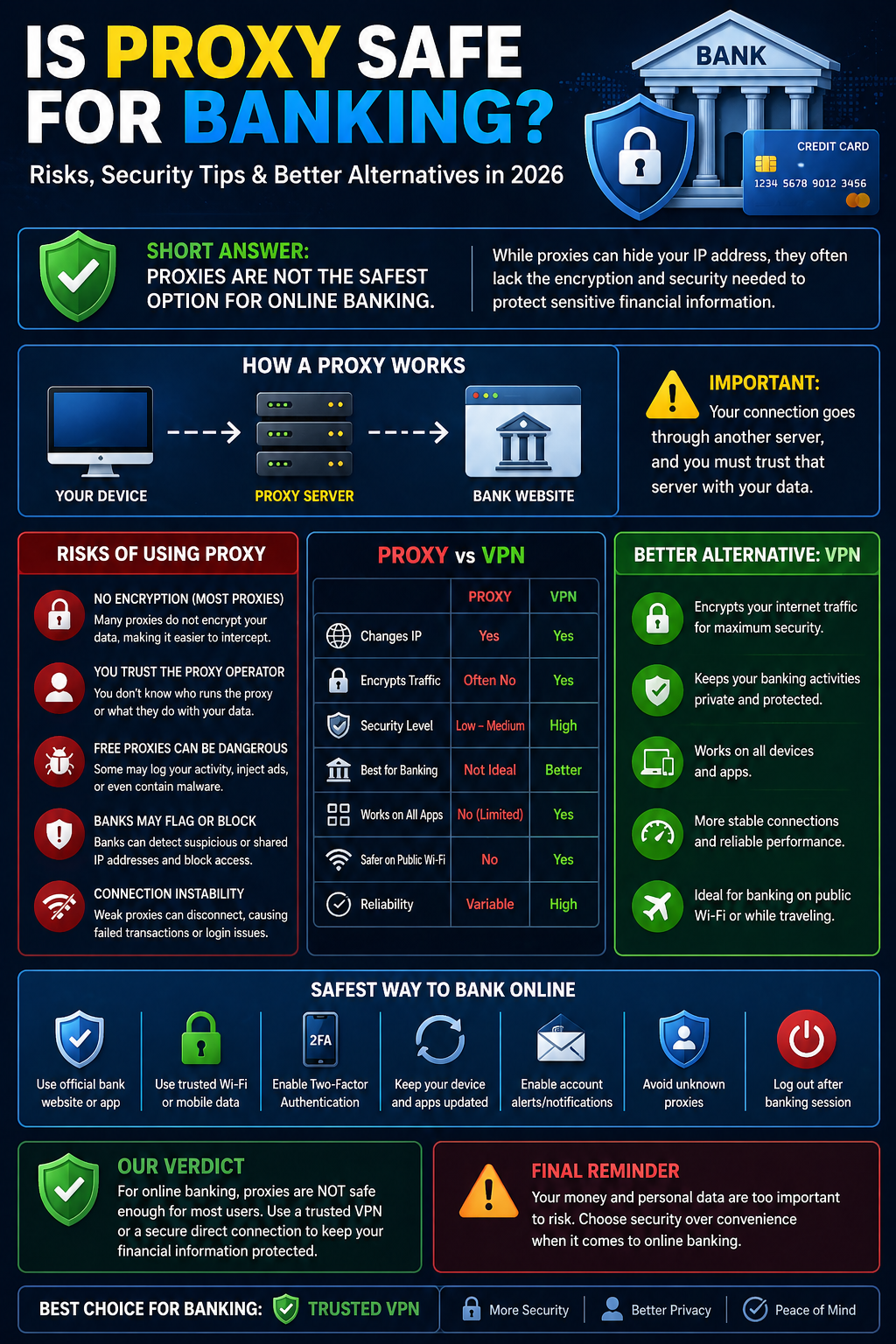
Short Answer: Is Proxy Safe for Banking?
Basic Summary:
- Free public proxies: Not recommended
- Unknown proxies: High risk
- Trusted enterprise proxy in managed networks: Depends on setup
- VPN instead of proxy: Usually safer for consumers
Why Proxies Can Be Risky for Banking
1. Some Proxies Do Not Encrypt Traffic
Many simple proxies only reroute traffic.
They may not provide full end-to-end encrypted tunnel protection like a VPN.
That means weaker protection on risky networks.
2. You Trust the Proxy Operator
When using a proxy, your traffic passes through another server.
You may not know:
- Who owns it
- Where it is hosted
- What logs are stored
- Whether it is secure
That uncertainty is dangerous for banking.
3. Free Proxies Can Be Untrustworthy
Some low-quality free proxy services may include:
- Aggressive ads
- Logging
- Poor maintenance
- Malware risk
- Session instability
4. Banking Sites May Flag Unusual IPs
Banks use fraud detection systems.
If you log in through:
- Shared proxy IPs
- Foreign locations
- Suspicious datacenter IPs
Your account may trigger alerts or temporary locks.
5. Session Interruptions
Weak proxies can disconnect mid-session, causing:
- Failed transfers
- Login loops
- Security challenges
Is HTTPS Enough?
Most banking sites use HTTPS, which is very important.
That helps secure communication with the bank website.
However:
- HTTPS alone does not make unknown proxies ideal
- You still route through third-party infrastructure
- Metadata and connection risks may remain
When Is Proxy Less Risky?
There are limited scenarios:
Corporate Managed Proxy
Some companies use secure internal proxies with IT management.
Reputable Secure Gateway
Organizations may route traffic through controlled gateways.
But for average personal users using public proxy websites:
Not recommended for banking.
Better Alternative: VPN for Banking
A reputable VPN is usually safer because it offers:
- Encrypted tunnel
- Better privacy on public WiFi
- Stable apps
- Device-wide protection
- Trusted provider transparency (if chosen well)
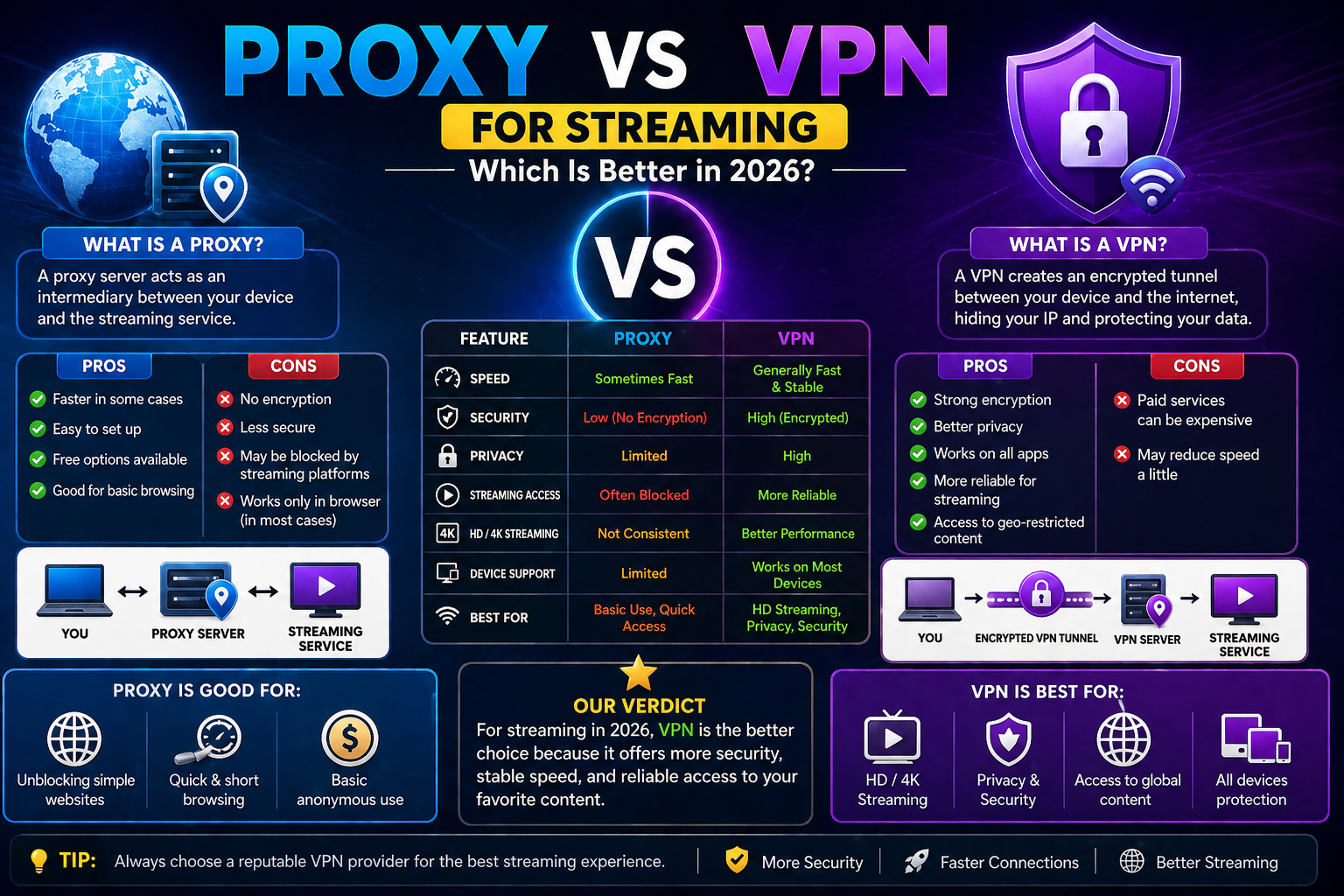
Proxy vs VPN for Banking
| Feature | Proxy | VPN |
| Changes IP | Yes | Yes |
| Encrypts Traffic | Often No | Yes |
| Better for Public WiFi | Weak | Strong |
| Trust Level | Varies widely | Better with reputable provider |
| Banking Use | Not ideal | Better option |
Safest Way to Bank Online
Best Setup:
- Use official bank app or official website
- Use home network or mobile data
- Keep device updated
- Enable 2FA
- Avoid unknown proxies
- Consider trusted VPN on public WiFi
Is Proxy Safe for Banking on Public WiFi?
This is one of the worst combinations:
- Public WiFi risk
- Unknown proxy risk
- Sensitive login
Better choice:
Use mobile data or trusted VPN.
Is Proxy Safe for Banking on iPhone?
Even on iPhone, a proxy does not automatically become safe.
Security depends on:
- Proxy quality
- Network safety
- Whether you use official bank app
- Device updates
Use official apps + secure network.
Is Proxy Safe for Banking on Android?
Same principle applies.
Avoid random proxy apps or unknown APKs.
Use official bank apps from trusted stores only.
Is Proxy Safe for Banking While Traveling?
Travelers often use hotel WiFi, airport WiFi and public hotspots.
Better options:
- Mobile hotspot
- Trusted VPN
- Bank app with biometric login
Avoid public proxy websites for financial logins.
Why Banks Sometimes Block Proxy Connections
Banks may detect:
- Shared IP ranges
- Datacenter traffic
- Suspicious geolocation jumps
- High-risk anonymous services
This can trigger extra verification.
Real Risks of Using Proxy for Banking
Possible outcomes:
- Extra security checks
- Login denied
- Fraud flags
- Session timeout
- Privacy concerns
What If You Already Logged In Through Proxy?
Do this calmly:
- Log out
- Change password if concerned
- Review recent activity
- Enable 2FA
- Use secure network next time
How to Protect Banking Sessions
Always Do These:
- Check website URL carefully
- Use official app when possible
- Enable notifications
- Never share OTP
- Update phone OS
- Avoid phishing links
Red Flags: Never Use Proxy for Banking If
- It is free and full of ads
- No privacy policy exists
- Site looks suspicious
- Browser warns insecure
- Random popups appear
- You found it from spam links
What Experts Usually Recommend
For financial tasks, experts generally prefer:
- Direct secure connection
- Official banking app
- Trusted VPN if needed
- Strong authentication
Not anonymous public proxies.
Common Myths
Myth: Proxy hides IP, so it is safe.
False. Hiding IP is not the same as secure banking.
Myth: Free proxy is same as VPN.
False. They are very different tools.
Myth: If bank site has lock icon, any network is fine.
False. Network trust still matters.
Best Option for Students and Public WiFi Users
If you must bank outside home:
- Use mobile data first choice
- Or trusted VPN
- Use official app
- Finish quickly and log out
My Honest Verdict
Should You Use Proxy for Banking?
For most people:
No.
Use safer methods instead.
Better Choices:
- Home WiFi
- Mobile network
- Trusted VPN
- Official bank app
Final Conclusion
So, is proxy safe for banking? In most personal-use situations, proxies are not the safest choice for financial logins or transactions. While they may hide your IP address, they often lack the trust and security standards required for banking. For safer online banking in 2026, use official apps, secure networks and trusted VPN services when needed.
Frequently Asked Questions
1. Is proxy safe for banking?
Usually not the best option, especially unknown public proxies.
2. Is VPN safer than proxy for banking?
Usually yes.
3. Can bank block proxy login?
Yes, some banks flag unusual IPs.
4. Is free proxy safe for banking?
Not recommended.
5. Is mobile data safer than public proxy?
Usually yes.
6. Can proxy steal passwords?
A malicious setup can create risks.
7. Is iPhone banking safe with proxy?
Better to avoid proxy and use secure direct connection.
8. Can I use proxy just to check balance?
Still not ideal.
9. What is safest network for banking?
Trusted home WiFi or mobile data.
10. Best tool for public WiFi banking?
Trusted VPN + official app.