Introduction to Proxy Servers
In today’s digital world, online privacy, security, and unrestricted access have become essential concerns. This is where a proxy server plays a crucial role. If you’ve ever searched for terms like “what is a proxy server,” “proxy meaning,” “proxy vs VPN,” or “best proxy server for privacy,” you’re in the right place.
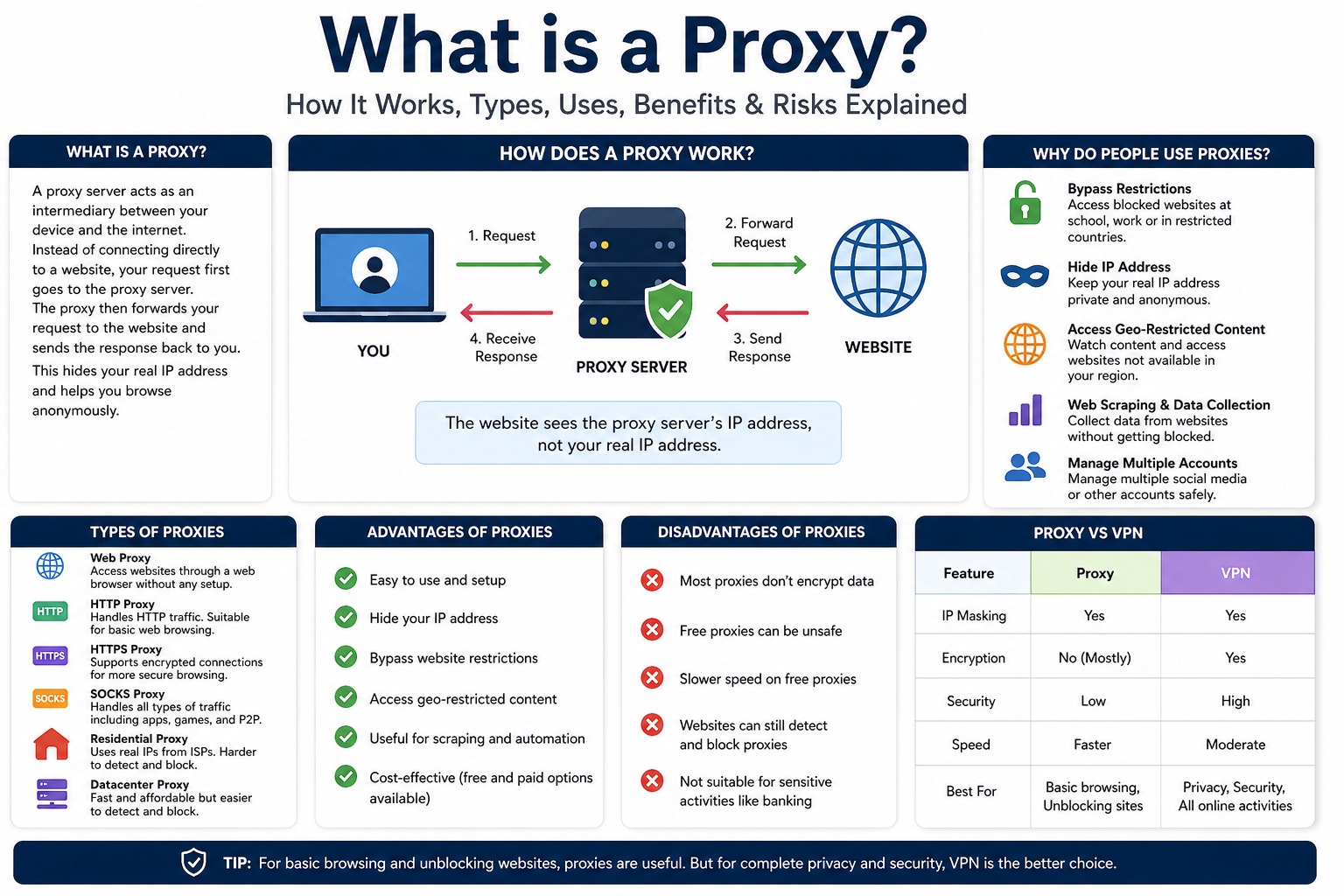
A proxy server acts as a gateway between your device and the internet. Instead of connecting directly to a website, your request is routed through a proxy server, which then communicates with the website on your behalf. This process helps hide your real IP address, enhance anonymity, and sometimes even improve browsing speed.
This comprehensive guide will cover everything you need to know about proxy servers, including types of proxy servers, how they work, benefits of proxies, proxy vs VPN comparisons, use cases, and SEO-rich explanations of all major proxy-related keywords.
What Is a Proxy Server?
A proxy server is an intermediary server that separates end users from the websites they browse. It provides varying levels of functionality, security, and privacy depending on the type of proxy used.
Proxy Meaning in Simple Terms
In simple words, a proxy acts like a “middleman” between you and the internet. When you request a webpage:
- Your request goes to the proxy server
- The proxy forwards the request to the target website
- The website sends data back to the proxy
- The proxy delivers the data to you
This way, your actual IP address is hidden.
How Does a Proxy Server Work?
Understanding how a proxy server works is essential for grasping its importance.
Step-by-Step Working:
- You enter a website URL
- The proxy intercepts your request
- It replaces your IP address with its own
- Sends the request to the target server
- Receives the response
- Forwards the response back to you
This mechanism ensures anonymous browsing, IP masking, and content filtering.
Types of Proxy Servers
There are several types of proxy servers, each designed for different use cases. Including these keywords helps optimize SEO: types of proxy server, proxy types, best proxy type, anonymous proxy, elite proxy.
1. Forward Proxy
A forward proxy sits between the user and the internet. It is commonly used in organizations to monitor and control internet usage.
2. Reverse Proxy
A reverse proxy sits in front of web servers and handles incoming requests. It is widely used for:
- Load balancing
- Security
- Performance optimization
3. Transparent Proxy
A transparent proxy does not modify requests and does not hide your IP address. Often used in schools, offices, and public Wi-Fi networks.
4. Anonymous Proxy
An anonymous proxy hides your IP but reveals that you are using a proxy.
5. Elite Proxy (High Anonymity Proxy)
An elite proxy server hides both your IP address and the fact that you’re using a proxy.
6. Residential Proxy
A residential proxy uses real IP addresses provided by ISPs. These are highly trusted and difficult to detect.
7. Data Center Proxy
A data center proxy is not affiliated with ISPs and comes from data centers. They are fast but easier to detect.
8. Public Proxy
A public proxy is free and open for anyone but often less secure.
9. Private Proxy
A private proxy server is dedicated to a single user, offering better speed and security.
Proxy Server vs VPN
One of the most searched topics is proxy vs VPN.
| Feature | Proxy Server | VPN |
|---|---|---|
| Encryption | No (usually) | Yes |
| Speed | Faster | Slightly slower |
| Security | Moderate | High |
| Coverage | App-specific | Entire device |
| Privacy | IP masking | IP masking + encryption |
Key Difference
A proxy server only hides your IP address, while a VPN (Virtual Private Network) encrypts all your internet traffic.
Benefits of Using a Proxy Server
Including keywords like benefits of proxy server, why use proxy, proxy advantages.
1. Enhanced Privacy
A proxy hides your IP address, enabling anonymous browsing.
2. Improved Security
Proxies can act as a firewall and filter malicious traffic.
3. Access Geo-Restricted Content
With proxies, you can bypass restrictions and access blocked websites.
4. Better Performance
Caching frequently visited sites can improve loading speed.
5. Bandwidth Savings
Organizations use proxies to reduce bandwidth consumption.
Common Use Cases of Proxy Servers
1. Business Use
Companies use proxy servers for:
- Monitoring employee activity
- Blocking harmful websites
- Data protection
2. Personal Use
Individuals use proxies for:
- Anonymous browsing
- Accessing restricted content
- Online privacy
3. Web Scraping
Proxies are widely used in web scraping to avoid IP bans.
4. SEO Monitoring
SEO professionals use proxies to:
- Track rankings
- Analyze competitors
- Perform keyword research
Proxy Server for SEO
Including SEO keywords like proxy for SEO, SEO proxy, best proxy for scraping.
Proxy servers are essential tools in SEO because they allow:
- Tracking search engine rankings from different locations
- Scraping SERPs without getting blocked
- Managing multiple accounts safely
Risks of Using Proxy Servers
1. Free Proxy Risks
Free proxies may:
- Log your data
- Inject ads
- Compromise security
2. Lack of Encryption
Most proxies do not encrypt traffic.
3. Data Theft
Untrusted proxies can steal sensitive information.
How to Choose the Best Proxy Server
Keywords: best proxy server, proxy buying guide, secure proxy
Factors to Consider:
- Speed
- Security
- Location availability
- Anonymity level
- Cost
Free vs Paid Proxy Servers
Free Proxy
- No cost
- Lower security
- Slower speeds
Paid Proxy
- High speed
- Better privacy
- Reliable performance
Setting Up a Proxy Server
Steps:
- Choose a proxy provider
- Get IP and port details
- Configure in browser/system settings
- Start browsing anonymously
Future of Proxy Servers
With increasing concerns over privacy and data security, the demand for proxy servers is expected to grow. Businesses and individuals alike are adopting proxies for safer and more flexible internet access.
SEO Rich Snippet Summary
A proxy server is an intermediary system that routes internet requests, hides your IP address, enhances privacy, improves security, and allows access to restricted content. Different types of proxy servers include forward proxy, reverse proxy, anonymous proxy, and residential proxy.
FAQ Section (Rich Snippet Optimized)
What is a proxy server?
A proxy server is a system that acts as a gateway between a user and the internet, masking the user’s IP address.
How does a proxy server work?
It forwards your request to a website and returns the response while hiding your identity.
Is a proxy better than a VPN?
A proxy is faster, but a VPN provides better security due to encryption.
What are the types of proxy servers?
Forward proxy, reverse proxy, anonymous proxy, elite proxy, residential proxy, and data center proxy.
Why do people use proxy servers?
For privacy, security, accessing restricted content, and improving performance.