Introduction
Virtual Private Networks (VPNs) have become essential tools for online privacy, secure browsing, and accessing restricted content. With the growing demand, users are often confused between choosing a free VPN or a paid VPN.
At first glance, free VPNs seem attractive because they cost nothing. However, when it comes to privacy, performance, and reliability, there are significant differences between free and paid VPN services.
This article provides a complete comparison of free vs paid VPN, helping you understand which option is better for your needs and why investing in a premium VPN can be a smarter decision.
What is a VPN?
A VPN (Virtual Private Network) creates a secure and encrypted connection between your device and the internet. It hides your IP address and protects your data from hackers, trackers, and internet service providers.
VPNs are commonly used for:
- Secure browsing
- Accessing geo-blocked content
- Protecting data on public WiFi
- Maintaining online privacy
What is a Free VPN?
A free VPN is a service that allows users to connect to a VPN server without paying any subscription fee. These services are often limited in features and may generate revenue through ads or data collection.
What is a Paid VPN?
A paid VPN is a premium service that offers advanced features, better security, and higher performance in exchange for a subscription fee. Paid VPNs focus on user privacy and provide a reliable browsing experience.
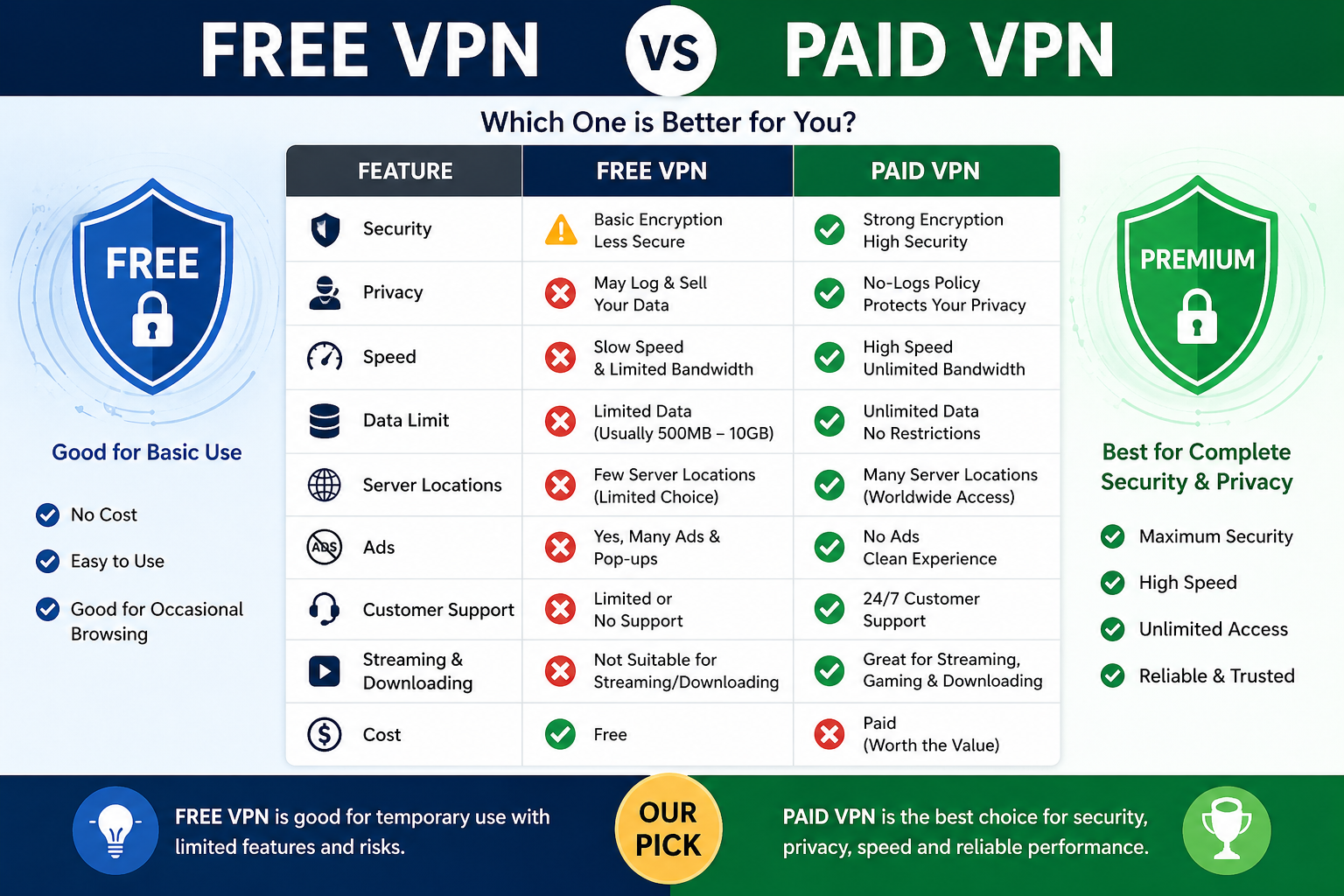
Free vs Paid VPN: Key Differences
1. Security and Privacy
Free VPNs often provide basic encryption but may log your data or sell it to third parties. Some free services have been known to track user activity.
Paid VPNs offer strong encryption, strict no-log policies, and advanced security features that ensure complete privacy.
2. Speed and Performance
Free VPNs usually have limited servers and high user load, which results in slow speeds and buffering issues.
Paid VPNs provide high-speed servers optimized for streaming, browsing, and downloads.
3. Data Limits
Most free VPNs impose data limits, such as daily or monthly caps.
Paid VPNs typically offer unlimited bandwidth, allowing uninterrupted usage.
4. Server Locations
Free VPNs offer limited server locations, restricting access to global content.
Paid VPNs provide a wide range of servers across multiple countries.
5. Ads and Tracking
Free VPNs often display ads and may track user behavior.
Paid VPNs are ad-free and prioritize user privacy.
6. Reliability
Free VPNs may experience frequent disconnections and downtime.
Paid VPNs offer stable connections and consistent performance.
Comparison Table
| Feature | Free VPN | Paid VPN |
| Cost | Free | Subscription-based |
| Security | Basic | Advanced |
| Privacy | Low | High |
| Speed | Slow | Fast |
| Data Limit | Limited | Unlimited |
| Ads | Yes | No |
| Server Locations | Few | Many |
| Reliability | Low | High |
Advantages of Free VPN
- No cost
- Easy to use
- Good for occasional browsing
Disadvantages of Free VPN
- Limited speed and bandwidth
- Potential privacy risks
- Ads and tracking
- Weak security
Advantages of Paid VPN
- Strong encryption
- High-speed servers
- Unlimited data
- No ads
- Better privacy protection
Disadvantages of Paid VPN
- Requires subscription
- May need installation and setup
Are Free VPNs Safe?
Free VPNs are not always safe. Some services log your data, display intrusive ads, or even sell your information to third parties.
While there are a few reputable free VPNs, they still come with limitations that can affect your experience and security.
When Should You Use a Free VPN?
Use a free VPN only when:
- You need temporary access
- You are browsing non-sensitive content
- You want to test a VPN service
When Should You Use a Paid VPN?
Use a paid VPN when:
- You want full privacy and security
- You stream or download content
- You use public WiFi
- You handle sensitive data
Why Paid VPNs Are Better for Long-Term Use
Paid VPNs are designed to provide a complete solution for online privacy and performance. They invest in infrastructure, security, and user experience, making them a better choice for long-term use.
Free VPNs, on the other hand, often compromise on security and performance to sustain their business model.
Common Myths About Free VPNs
Many users believe that all VPNs offer the same level of protection. This is not true. Free VPNs often lack advanced features and may expose users to risks.
Another misconception is that free VPNs are completely safe. In reality, their limitations can make them less reliable.
How to Choose the Right VPN
When selecting a VPN, consider the following:
- Strong encryption
- No-log policy
- Fast server speeds
- Multiple server locations
- Good customer support
Conclusion
The choice between a free VPN and a paid VPN depends on your needs. Free VPNs can be useful for basic and temporary usage, but they come with limitations and potential risks.
Paid VPNs offer better security, faster speeds, and a more reliable experience. If privacy and performance are important to you, investing in a paid VPN is the better option.
FAQs
Is a free VPN safe to use?
Free VPNs can be risky as they may track or sell your data.
Why are paid VPNs better?
Paid VPNs offer better security, speed, and reliability.
Do free VPNs have data limits?
Yes, most free VPNs limit data usage.
Can I use a free VPN for streaming?
Free VPNs are usually too slow for streaming.
Is it worth paying for a VPN?
Yes, if you value privacy, security, and performance.